
Vision Jet Training · Part 61
SF50 type ratingin your own jet
- Trained and tested in the airplane, so you leave with a full type rating and no pilot-in-command limitation.
- 61.58 recurrent, supervised operating experience and mentoring, built around the trips you fly.
Part 61 type rating
Trained and tested in the airplane you fly.
Your SF50 type rating under Part 61, in your own jet, at your location or with us in Florida. One size does not fit all: the number of training days follows your pilot profile, and your ground school starts before day one, with our computer based training.
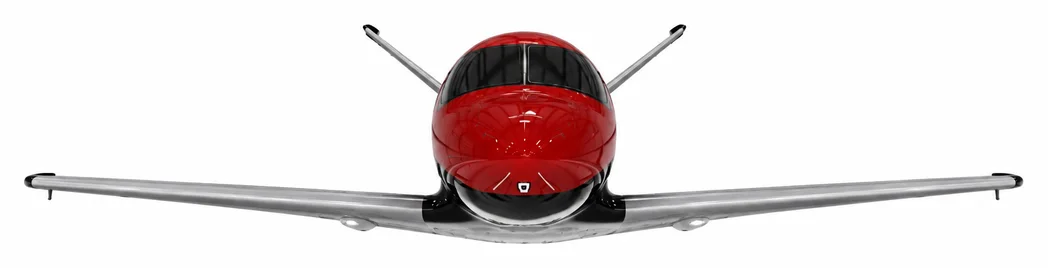
With us, in your airplane
- We train and test in the airplane, so the limitation does not apply: you leave with a full type rating.
- A practical test at ATP level, to FAA-S-ACS-11A, in actual or simulated instrument conditions. The test is flown single-pilot and includes a no-flap approach and landing.
- Training from an FAA authorized instructor and a logbook endorsement attesting competence at ATP level; an instrument rating, already held or obtained at the same time.
Entirely in a simulator
A test flown entirely in a simulator can leave the limitation “The SF-50 is subject to pilot in command limitations”, removed only after 25 hours of supervised pilot-in-command flying in the type.
What 14 CFR 61.64 saysAfter the rating
- 61.58 proficiency checks: one in the previous 12 calendar months, and one in the SF50 in the previous 24 calendar months
- A high-altitude endorsement under 61.31(g): SF50 configurations are certified to 28,000 or 31,000 ft
- The type-rating test also counts as your flight review for 24 calendar months
14 CFR 61.64
The 61.64 limitation, in the rule’s own words.
Section 61.64 sets out when a type-rating test leaves a limitation on your certificate, and how it comes off. The SF50 is a turbojet, so paragraph (b) is the one that applies to it. Quoted from the eCFR, Title 14, current as of October 9, 2026.
-
1When it applies
§ 61.64(b)
(b) Except as provided in paragraph (f) of this section, if an airplane is not used during the practical test for a type rating for a turbojet airplane (except for preflight inspection), an applicant must accomplish the entire practical test in a Level C or higher flight simulator and the applicant must—
(1) to (5): the experience that allows a test without the airplane
(1) Hold a type rating in a turbojet airplane of the same class of airplane for which the type rating is sought, and that type rating may not contain a supervised operating experience limitation;
(2) Have 1,000 hours of flight time in two different turbojet airplanes of the same class of airplane for which the type rating is sought;
(3) Have been appointed by the U.S. Armed Forces as pilot in command in a turbojet airplane of the same class of airplane for which the type rating is sought;
(4) Have 500 hours of flight time in the same type of airplane for which the type rating is sought; or
(5) Have logged at least 2,000 hours of flight time, of which 500 hours were in turbine-powered airplanes of the same class of airplane for which the type rating is sought.
-
2Without that experience
§ 61.64(f)
(f) If the applicant does not meet one of the experience requirements of paragraphs (b)(1) through (5), paragraphs (c)(1) through (5), paragraphs (d)(1) through (4), or paragraph (e) of this section, as appropriate to the type rating sought, then—
(1) The applicant must complete the following tasks on the practical test in an aircraft appropriate to category, class, and type for the rating sought: Preflight inspection, normal takeoff, normal instrument landing system approach, missed approach, and normal landing; or
(2) The applicant's pilot certificate will be issued with a limitation that states: “The [name of the additional type rating] is subject to pilot in command limitations,” and the applicant is restricted from serving as pilot in command in an aircraft of that type.
-
3How it comes off
§ 61.64(g)
(g) The limitation described under paragraph (f)(2) of this section may be removed from the pilot certificate if the applicant complies with the following—
(1) Performs 25 hours of flight time in an aircraft of the appropriate category, class (if a class rating is required), and type for which the limitation applies under the direct observation of the pilot in command who holds a category, class (if a class rating is required), and type rating, without limitations, for the aircraft;
(2) Logs each flight and the pilot in command who observed the flight attests in writing to each flight;
(3) Obtains the flight time while performing the duties of pilot in command; and
(4) Presents evidence of the supervised operating experience to any Examiner or Flight Standards office to have the limitation removed.
-
4Why the airplane avoids it
Paragraph (b), and with it the limitation of (f)(2), concerns a practical test in which an airplane is not used. We train and test in the airplane, so it does not apply.
Recurrent · 14 CFR 61.58
Recurrent, built around your missions.
More than an annual box to check. Systems updates, CAPS decision-making and scenario training built around your own missions, including the hard parts: winter operations, busy airspace, international procedures. The program is updated continuously, so recurrent training becomes an event you look forward to, not a formality.
Plan your recurrent§ 61.58(a)
(a) Except as otherwise provided in this section, to serve as pilot in command of an aircraft that is type certificated for more than one required pilot flight crewmember or is turbojet-powered, a person must—
(1) Within the preceding 12 calendar months, complete a pilot-in-command proficiency check in an aircraft that is type certificated for more than one required pilot flight crewmember or is turbojet-powered; and
(2) Within the preceding 24 calendar months, complete a pilot-in-command proficiency check in the particular type of aircraft in which that person will serve as pilot in command, that is type certificated for more than one required pilot flight crewmember or is turbojet-powered.
In the SF50 that means 61.58 proficiency checks: one in the previous 12 calendar months, and one in the SF50 in the previous 24 calendar months.
§ 61.58(i)
(i) If a pilot takes the pilot-in-command proficiency check required by this section in the calendar month before or the calendar month after the month in which it is due, the pilot is considered to have taken it in the month in which it was due for the purpose of computing when the next pilot-in-command proficiency check is due.
Supervised operating experience · Mentoring
A second expert in the right seat.
Supervised operating experience for Part 142 graduates, built on real trips you want to fly, and mentoring after the rating for as long as you want it.
- 01
Supervised operating experience
A certificate with the 61.64 limitation needs 25 hours flown “under the direct observation of the pilot in command who holds a category, class (if a class rating is required), and type rating, without limitations, for the aircraft”. We fly those hours with you on trips you want to fly, and the observing pilot attests to each flight in writing, as 61.64(g)(2) asks.
- 02
Mentoring for insurance, and beyond
Post-rating mentoring on the trips you plan: the hours your insurance asks for, or simply as long as you want a second expert in the right seat.
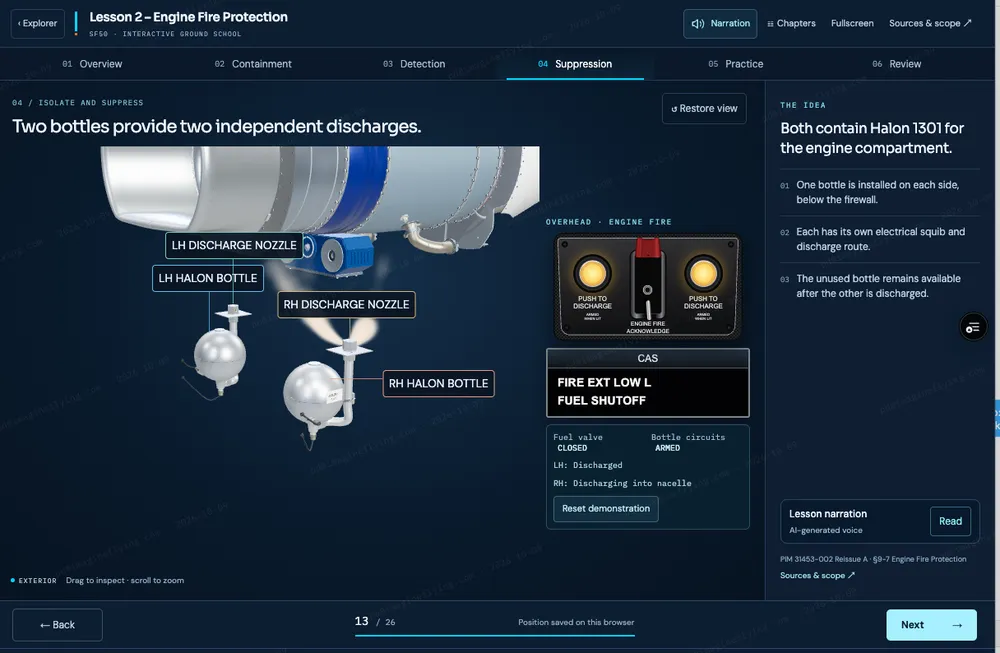
SF50 Computer Based Training
Understand the airplane before day one.
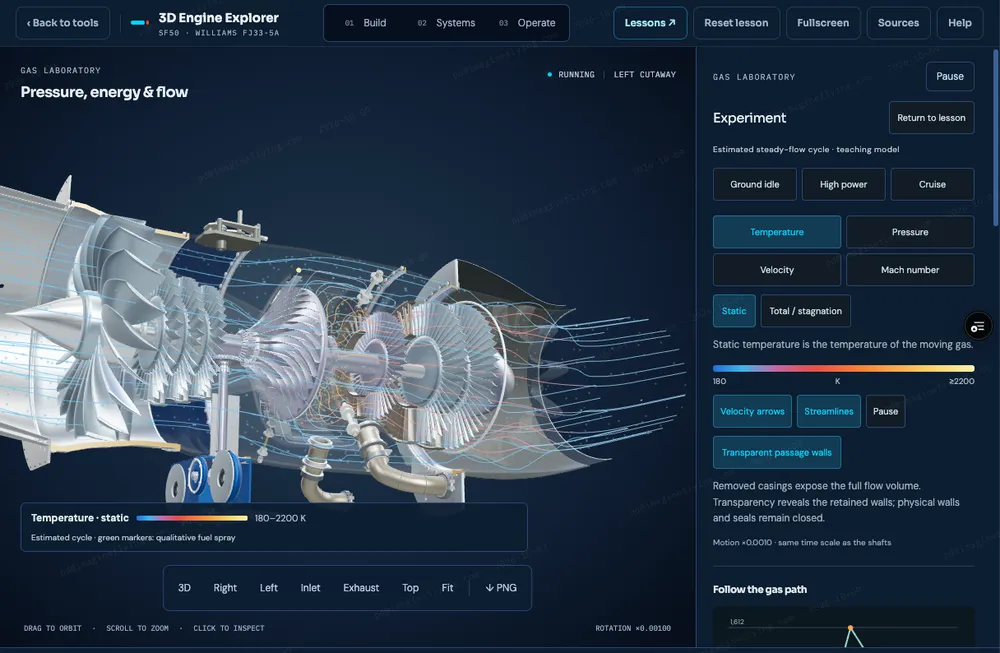
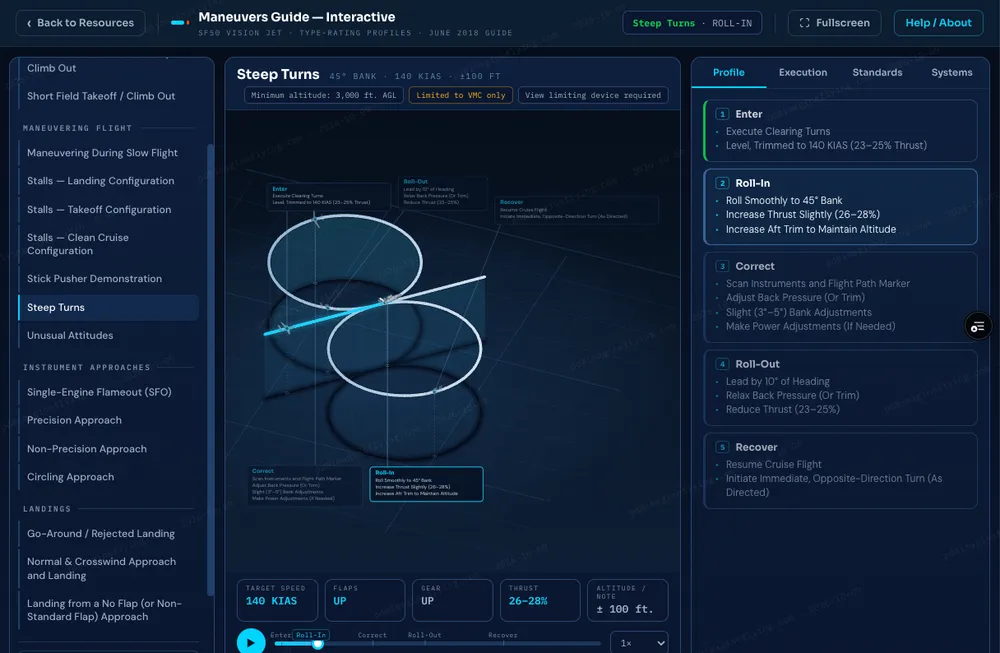
Type rating and recurrent training with us give you access to our computer based training for the Vision Jet. Instead of talking heads and 2D graphics, an interactive 3D journey through the aircraft systems: you learn, understand and practice the airplane before your first training day with an instructor.
- Ten interactive systems simulators, from fuel and electrical to FADEC and avionics, each running the real logic of the system, with failures you can trigger and work through.
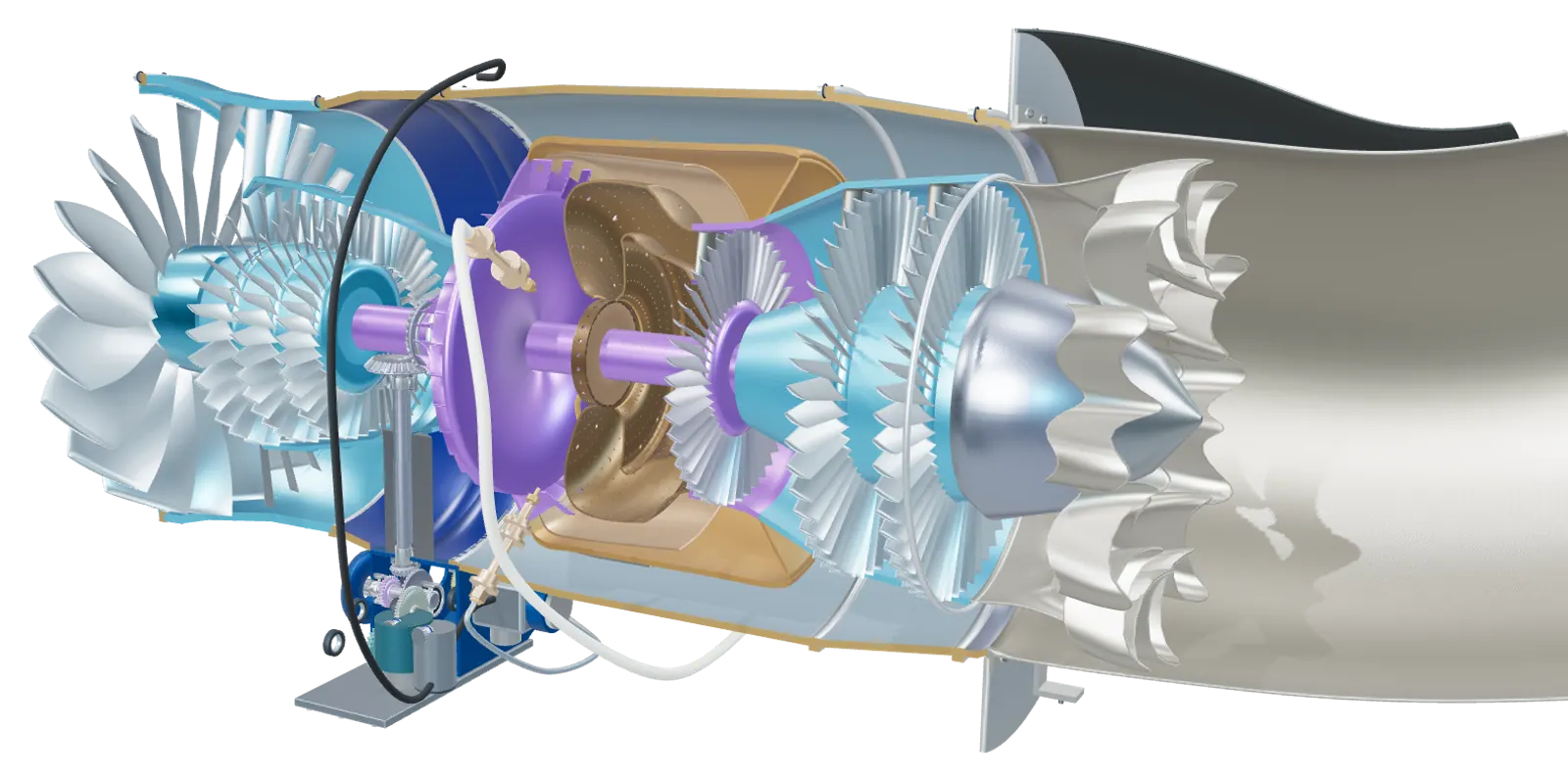
- 3D engine and aircraft explorers. Walk around and through the airplane and its engine, component by component.
- Sixteen ground-school modules with narrated lessons, quizzes, a comprehensive exam and practice tools, built from the manufacturer's publications.
cbt.imagineflying.com · included with your training
International pilots
Flying in for your SF50 rating.
The TSA Flight Training Security Program (FTSP) applies to everyone who is neither a US citizen nor a US national, whatever their nationality, US permanent residents included. Before your first flight training you need a Determination of Eligibility, TSA’s approval after a security threat assessment.
- 49 CFR part 1552
What counts as flight training
Instruction in an aircraft, a flight simulator or a training device toward a new skill, certificate or type rating, or to maintain a certificate or rating: the instrument rating, the multiengine rating, type ratings and recurrent type-rating training. There is no weight threshold, so SF50 type-rating training is covered. Canadian pilots included: the rule applies whatever your nationality.
- With us
Approval before any flight with us
Our policy: we ask for a Determination of Eligibility before any flight with us. The rule lets training start once more than 30 days, or 5 business days for expedited candidates, have passed since TSA acknowledged the event notification. A valid Determination of Eligibility alone does not guarantee an immediate start, so we confirm each start date before you book travel.
- Timing and fee
Apply early
The rule gives TSA 30 days for a complete application. TSA suggests applying at least 30 days before your planned training. Fee: US$140, or US$125 if you upload a valid comparable credential, such as TSA PreCheck, Global Entry or NEXUS, before paying. One fee covers all your training for up to five years.
- 61.75(c)
On a 61.75 certificate
Section 61.75(c) allows aircraft ratings issued after an FAA test, type ratings included, to sit on a 61.75 certificate next to the ratings from your license, with private privileges only. FAA guidance requires a current letter when a 61.75 holder adds a rating; time yours to be valid on the day of the test.
- TSA portal
Choose us in the TSA portal
To train with us, select the provider listed as Piotr Dlugiewicz under the New York FSDO.
The whole route, from the verification letter to the TSA portal, is on our FAA pathways page and in our free guide. The TSA step in detail
Talk about your Vision JetGet in touch · Free initial consultation
Let’s plan your SF50 type rating.
Tell us where you are and where you want to be. Every message is read by the instructor you will fly with, and answered within one business day.
We train in your own SF50. Still buying one? Tell us where you are in the process, and we reply personally.
Jacksonville Executive Airport at Craig (KCRG)
985 Charles Lindbergh Dr, Ste 3E
Jacksonville, FL 32225, USA
Thank you. Your message is in.
Expect a reply within one business day. A confirmation is on its way to your inbox.
Prefer to talk sooner? Pick a time for a free 20-minute call.
Book a 20-minute call